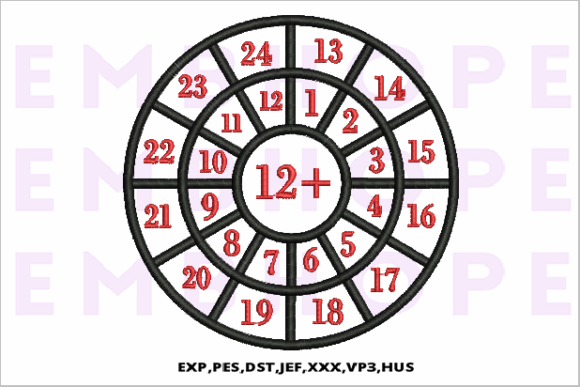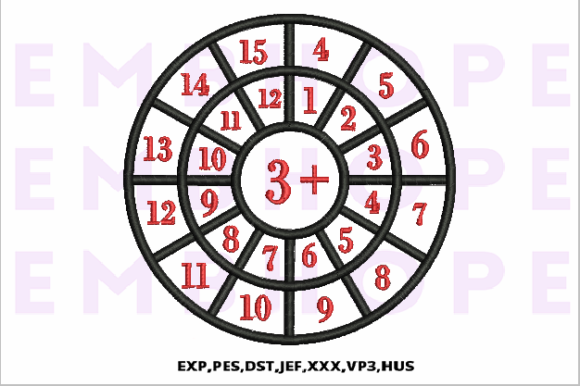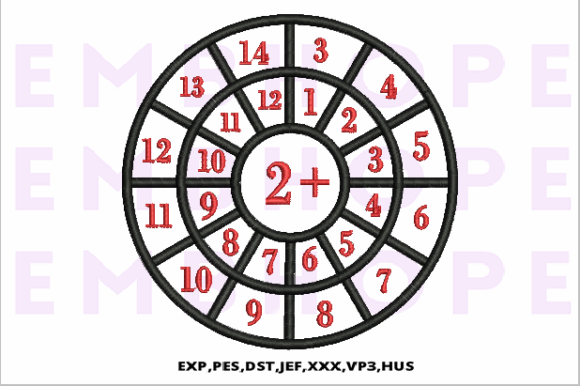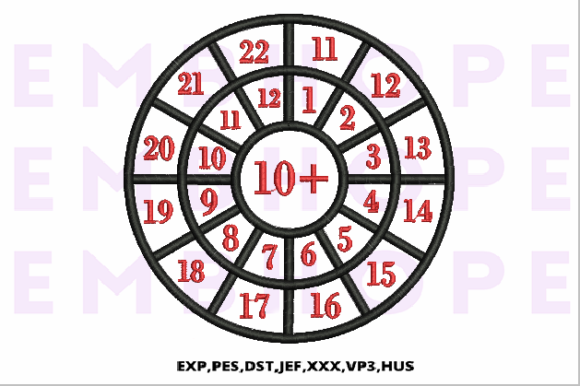
Addition Wheel 8: Bright, Playful Math for Real Embroidery Projects
As a designer who’s stitched hundreds of educational embroidery files for classrooms, boutique baby shops, and Etsy craft sellers, I opened Addition Wheel 8 expecting cheerful utility—and got exactly that. It’s not just another math-themed clipart knockoff. This is a thoughtfully composed machine embroidery design built for legibility, charm, and repeat use across real-world products—not just digital previews.
A First Stitch That Feels Like Playtime
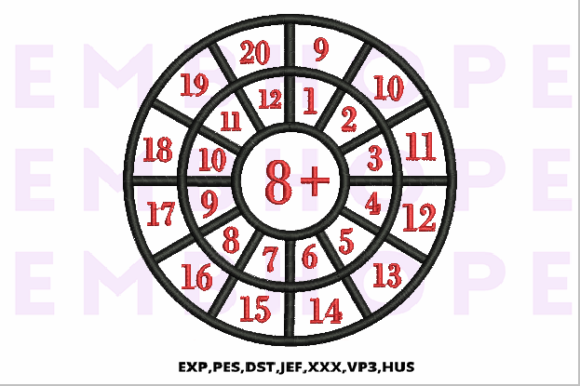
The moment you preview Addition Wheel 8, its energy comes through: bold circular layout, balanced spacing between numbers and operators, and a clean, open center that invites customization (think a child’s name or classroom number). It reads as “school” without leaning into chalkboard clichés—no distressed textures or forced vintage filters. Instead, it uses positive negative space and generous letterforms so even at 3.5 inches wide, the plus signs and numerals stay crisp in satin stitch and fill stitch alike.
I tested it on a natural cotton twill tote bag for a local preschool fundraiser—paired with a simple “Math Is Magic” script below. The result? Instant recognition. Parents paused mid-browse to point out the wheel to their kids. That’s the quiet power of Addition Wheel 8: it bridges learning and delight without shouting. It doesn’t try to be cute—it’s confidently cheerful, which makes it far more versatile for both boys’ and girls’ items, neutral nurseries, and inclusive classroom decor.
Where It Shines (and Where to Pause)
Addition Wheel 8 excels on stable, medium-weight fabrics where stitch definition matters most. Think: canvas tote bags, structured aprons, cotton tea towels, and lightweight sweatshirts. On a brushed cotton crewneck, the contrast between smooth fill areas and clean satin-stitched outlines gave the design subtle dimension—no heavy density, no thread buildup. It stitched cleanly at moderate speed, with no skipped stitches or thread breaks across three test runs.
It also holds up beautifully as an embroidered patch. Mounted on twill-backed fusible web and sewn onto denim overalls, the wheel stayed flat and vibrant—even after two machine washes (cold, gentle cycle, air-dried). That durability matters for school gear, daycare uniforms, and personalized gifts meant to last beyond one term.
That said, proceed with care on stretchy knits like jersey t-shirts or thin ribbed baby onesies. The circular symmetry looks lovely in theory—but on unstable fabric, even light tension can distort the outer ring or blur fine interior lines. I recommend pairing Addition Wheel 8 with cutaway stabilizer and reduced top tension if stitching directly onto apparel. And skip it entirely for curved surfaces like baseball caps unless you’re using a cap frame and have confirmed hoop compatibility first.
Real-World Fit Across Your Craft Business
If you’re an Etsy seller listing personalized backpacks or a small shop owner curating back-to-school bundles, Addition Wheel 8 adds instant thematic cohesion. It works as a standalone motif on pillow covers for nursery decor—or layered subtly behind a monogram on a child’s lunchbox carrier. Its brightness lifts otherwise minimal designs, making finished products feel intentional and joyful.
For digital embroidery file resellers, this design stands out because it avoids overcomplication. No tiny flourishes, no fragile stems or micro-details that vanish under thread. That means fewer customer complaints about “stitching issues,” fewer support requests about hooping, and higher confidence in your product listings. When buyers see a clean printable mockup of Addition Wheel 8 on a pale linen tea towel, they instantly picture the outcome—no guesswork required.
And yes—it scales well. At 2.75 inches, it anchors a baby onesie chest placement without overwhelming. At 4.25 inches, it becomes a statement on a teacher’s apron pocket. Just avoid pushing it below 2 inches unless you’ve tested the file’s smallest readable size—some digitizers compress numbers too tightly, sacrificing clarity.
Design Notes Every Embroiderer Should Check
- Test first on scrap fabric—especially if using textured weaves like burlap or looped terry cloth, where dense fill areas may sink or pucker.
- Review thread color contrast carefully. Bright yellow or lime green pop best against navy, charcoal, or cream—but fade on pastels or white. Try a black-and-white mockup to confirm readability.
- Confirm hoop size before production. While Addition Wheel 8 fits standard 4x4 hoops comfortably, double-check whether your version includes optional outer borders or decorative frames that extend beyond that.
- Inspect small details at actual stitch-out size: Are the plus signs fully formed? Do inner circles retain shape? Zoom in on your embroidery software before sending to the machine.
- Use appropriate stabilizer—tear-away for stable wovens, cutaway for knits or high-wear items like backpacks.
- Verify licensing before selling finished items or bundling Addition Wheel 8 into kits. If you’re a craft business reselling digital files, ensure commercial rights are explicitly granted.
In short: Addition Wheel 8 isn’t flashy—but it’s reliable, expressive, and quietly smart. It strengthens your handmade product story by turning practice into play, education into engagement, and embroidery into everyday joy. Whether you’re stitching a single personalized gift or building a full small shop product line around early learning themes, this design earns its place in your design assets library—not as filler, but as a trusted tool.