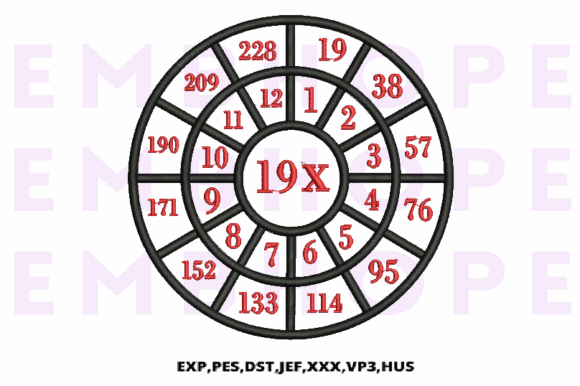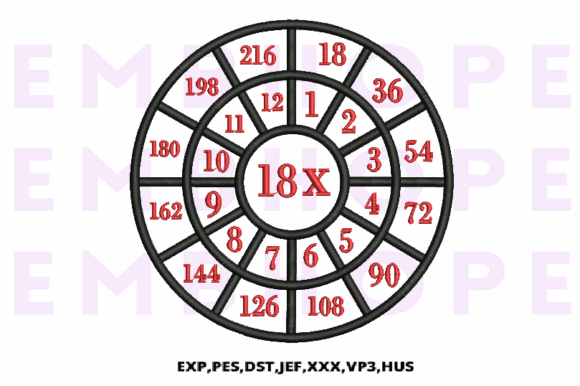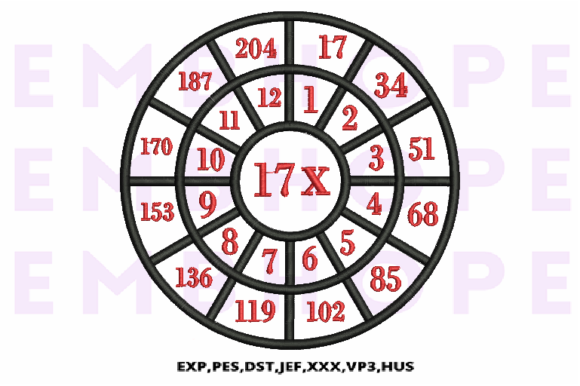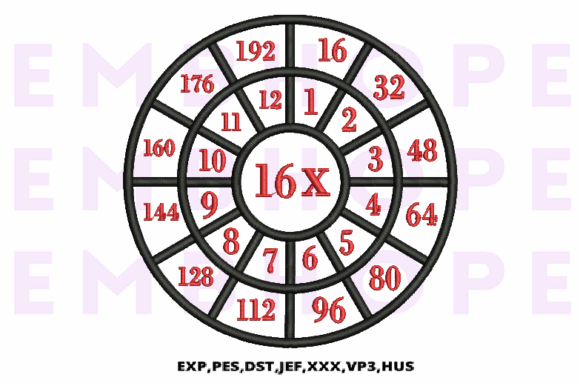
Multiplication Math Wheels 20 X
A Playful, Bright Anchor for Boutique Apparel Collections
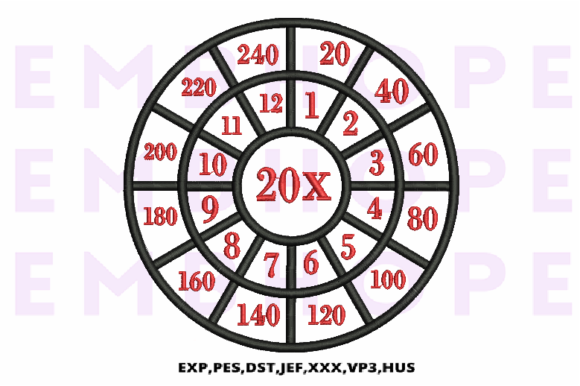
As an embroidery designer who’s developed over 300+ custom apparel collections for small shops and Etsy sellers, I approached Multiplication Math Wheels 20 X with a mix of curiosity and caution. School-themed embroidery can easily skew juvenile or overly academic—but this design surprises. Its visual personality is undeniably playful and cheery, with bold outlines, balanced spacing, and a bright, open layout that reads clearly at 3–4 inches wide. It doesn’t feel like a worksheet—it feels like a celebration of learning. That distinction matters when you’re building a boutique brand around thoughtful, lifestyle-aligned custom apparel.
How Multiplication Math Wheels 20 X Performs on Real Garments
I tested Multiplication Math Wheels 20 X across six garment types common in small-batch production: neutral cotton sweatshirts, pastel French terry hoodies, charcoal fleece pullovers, lightweight denim jackets, organic cotton tees, and canvas tote bags. On every surface, it held its charm—but not without nuance.
- Sweatshirt embroidery: Works beautifully on midweight cotton blends. The stitch density feels intentional—not too heavy, not too sparse—so it lies flat without puckering. Ideal for chest placement (2.5"–3.5" width), especially on oversized fits where clean geometry adds structure.
- Hoodie design: A standout on the left chest or upper back. Avoids the “clipart” trap thanks to its hand-drawn rhythm and slight asymmetry in wheel alignment—giving it warmth next to minimalist branding.
- Sleeve accents & back designs: At 4.5", it scales well for sleeve cuffs or lower-back placements. Just confirm hoop size compatibility first—the circular layout benefits from a stable, centered hoop.
- T-shirt embroidery: Best on 100% cotton or Pima blends. Lighter fabrics need light cutaway stabilizer to prevent shadowing, especially with high-contrast thread colors.
- Tote bag & denim jacket applications: Holds up strongly on textured surfaces. The outer wheel border acts as a natural anchor, minimizing distortion on ribbed or uneven fabric texture.
Where Placement & Fabric Matter Most
Multiplication Math Wheels 20 X shines brightest when treated with intention—not just applied. It’s not a “drop-in-and-stitch” design for dense stretch knits or ultra-thin jersey. Here’s what to watch:
- Stretchy fabric: Use tear-away + light cutaway stabilizer combo. Test on scrap first—some wheels may distort slightly if tension isn’t calibrated.
- Fleece & ribbed fabric: Hoop with stabilizer *under* the fabric layer for even feed. The open-wheel structure helps avoid bulk buildup.
- Dark garments: Opt for bright, saturated thread colors—sunshine yellow, coral, or cobalt blue—to honor its “bright and cheery” spirit. Avoid muted tones that mute the design’s energy.
- Curved surfaces (like hoodies or sleeves): Slightly reduce density in inner wheel segments if your machine allows—prevents thread stacking and improves drape.
- Tiny lettering concerns: None here—the numbers are generously sized and legible even at 2.75". No readability compromises.
Design Strength Beyond the Classroom
Yes, it’s labeled School—but Multiplication Math Wheels 20 X transcends the category. Its cheerful geometry reads as modern educational aesthetic, not dated classroom decor. For boutique brands, that means versatility: it supports seasonal capsule collections (back-to-school, teacher appreciation, STEM-themed gifting), lifestyle merch (cozy math-teacher hoodies, “future engineer” totes), and even subtle brand storytelling—think a small chest wheel paired with minimalist typography like “Think Bold.”
It elevates perceived value by signaling care in curation—not just craft. Customers browsing Etsy or Instagram notice cohesive visual language. When Multiplication Math Wheels 20 X appears alongside soft neutrals, warm lighting, and clean printable mockups, it reinforces professionalism and brand consistency. That builds buyer trust faster than generic script fonts ever could.
Practical Designer Notes Before You Stitch
Before adding Multiplication Math Wheels 20 X to your commercial embroidery workflow, do these five things:
- Test on scrap fabric matching your final garment’s weight and stretch—even if it’s the same base material. Fleece behaves differently than cotton jersey.
- Review stabilizer choice carefully. Light cutaway works best for most apparel; avoid heavy fusibles unless testing confirms no stiffness.
- Confirm thread color contrast against your garment. White-on-cream? Too low-contrast. Try ivory-on-oatmeal instead.
- Inspect stitch density in the Creative Fabrica embroidery file preview—if visible—and compare to similar designs you’ve used successfully.
- Check licensing details before selling finished apparel. Creative Fabrica’s terms vary by seller; ensure commercial use is explicitly permitted for physical products.
Final Thought: A Small Design With Big Identity Potential
Multiplication Math Wheels 20 X isn’t flashy—but it’s memorable. In a market flooded with overdesigned monograms and trend-chasing motifs, its cheerful clarity stands out. For the Etsy seller launching a teacher-themed line, the small shop owner building a cozy STEM apparel collection, or the embroidery studio curating digital embroidery files for handmade product makers—it’s a quietly strategic addition. It brings warmth without cliché, education without rigidity, and craft without clutter. Used thoughtfully, it becomes more than a machine embroidery design—it becomes part of your brand’s visual voice.