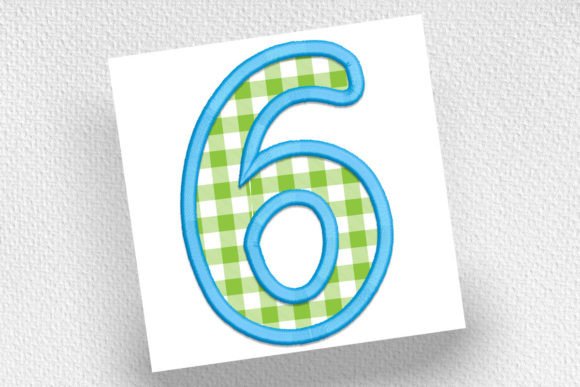
6 Number Six Applique
A Designer’s First Glance: Clean, Confident, and Quietly Playful
When I opened 6 Number Six Applique for the first time, I didn’t see just a number—I saw a small but intentional design decision. It’s not fussy or overly ornate, but it carries presence: rounded edges, balanced weight, and that subtle lift of an appliqué base that invites texture without demanding attention. As someone who regularly selects embroidery files for client work—especially for boutique school merchandise, baby gift sets, and handmade totes—I immediately pictured it on a soft cotton tea towel, stitched in navy thread with a crisp white fabric base. The “six” feels grounded, friendly, and ageless—not too cutesy for a nursery, not too stark for a teacher appreciation gift.
Where It Lives Best: Real Projects, Not Just Mockups
I recently used 6 Number Six Applique as the centerpiece for a custom embroidered tote bag series for a local elementary PTA fundraiser. We paired it with minimalist font initials and a tiny apple motif—no clutter, no competing elements. The result? A clean, cohesive look that read clearly at arm’s length and held up beautifully after three rounds of washing. That’s where this design shines: in projects where clarity, charm, and quiet confidence matter more than flash. It works well on sweatshirt embroidery (especially mid-chest placement), baby onesies (when scaled down thoughtfully), and even as a standalone embroidered patch for backpacks or denim jackets. For Etsy sellers, it’s a smart digital embroidery file to bundle with themed collections—think “Back to School Numbers,” “Nursery Countdown Sets,” or “First Day of Kindergarten Kits.”
What Happens When You Stitch It—Not Just Preview It
On medium-weight cotton twill (like a standard tote), 6 Number Six Applique stitched cleanly with minimal puckering. The satin stitch border held its shape, and the fill stitch inside the number stayed dense enough to read clearly—even at 3.5 inches wide. On stretchy knit fabric, though? I’d recommend a light cutaway stabilizer and slightly reduced stitch density if your machine allows. Without it, the curves can soften just enough to blur the number’s legibility. And on dark fabric—say, charcoal linen—I found black thread worked, but navy or deep burgundy gave richer contrast and felt more intentional in a finished product.
Watch These Details Before You Commit
- Hoop size matters: Check the actual dimensions before loading—some versions may require a 4x4 hoop minimum, while others scale comfortably into 3x3 for smaller items like baby caps.
- Fabric texture changes everything: On nubby linen or terry cloth towels, test first—the appliqué edge may catch or lift slightly if the base fabric is too uneven.
- Curved surfaces need strategy: If stitching on a cap or curved pillow cover, consider repositioning the design so the straighter side of the “6” faces the curve’s apex—this reduces distortion in the satin stitch.
- Small corners = tight stitches: The inner curve of the “6” has fine detail. On ultra-thin fabrics (like lightweight voile), use a tear-away + topping combo to prevent thread nesting.
How It Shapes Perception—Of Your Work, Your Brand, Your Gift
Embroidery isn’t just decoration—it’s a signal. A well-executed 6 Number Six Applique tells customers you pay attention to proportion, thread choice, and finish. It elevates a simple tote bag from “handmade” to “thoughtfully made.” For craft business owners, that distinction builds trust—and repeat sales. I’ve seen clients choose one Etsy shop over another because the number on a child’s backpack looked crisp, balanced, and intentional—not pixelated or stretched. That’s the power of a reliable applique design: it quietly reinforces professionalism, even when the item itself is playful.
Practical Notes Every Designer Should Run Through
- Test 6 Number Six Applique on scrap fabric matching your final project’s weight and weave—not just on smooth cotton.
- Review stitch density in your embroidery software. If it looks overly heavy in the fill area, reduce density by 5–10% for breathable fabrics.
- Check thread color contrast using both light and dark mockups—don’t rely on screen brightness alone.
- Use proper stabilizer: tear-away for stable wovens, cutaway for knits or stretchy blends, and a light water-soluble topping for textured surfaces.
- Confirm licensing terms before listing finished products on Etsy or bundling the file for resale—this applies whether you’re a solo crafter or a small shop owner.
- For printable mockups or digital previews, render 6 Number Six Applique in grayscale first—this reveals any subtle contrast issues invisible on screen.
Final Thought: A Small Design With Real Weight
6 Number Six Applique won’t shout—but it doesn’t need to. In a world of oversaturated digital embroidery files, its restraint is its strength. It fits naturally into school-themed collections, personalized baby gifts, and small-batch home goods without forcing a theme or overwhelming the item it’s on. As a designer, I appreciate that it leaves room—for names, for other motifs, for breath, for meaning. Whether you’re stitching it onto a graduation cap, a kindergarten lunchbox, or a holiday kitchen towel, it lands with warmth and precision. That’s not easy to find. And that’s why it earns space in my go-to design assets folder.