Number 8 Applique: A Practical Designer’s Review
First Impressions: Clean, Confident, and Quietly Playful
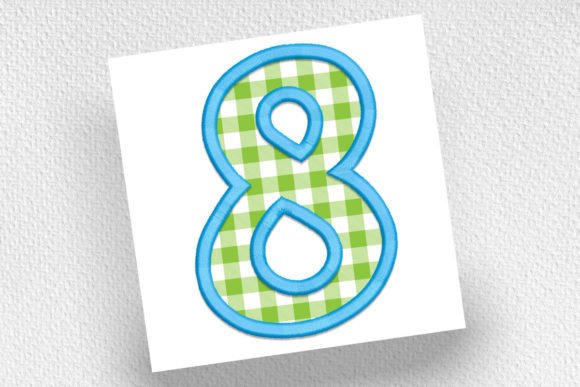
When I opened Number 8 Applique for the first time, what struck me wasn’t flashiness—it was balance. The shape is rounded but grounded, with soft curves that suggest movement without sacrificing structure. It reads as both numeric and symbolic—like a gentle nod to school days, birthday celebrations, or even a quiet “8” in a nursery timeline. As an embroidery designer who regularly evaluates files for client work and small-batch production, I appreciated how its visual weight sits comfortably between minimal and decorative. It doesn’t shout; it invites. That makes Number 8 Applique unusually versatile—not just for school-themed items, but for baby embroidery, boutique tote bags, or even modern kitchen towels where subtlety reads as sophistication.
A Real-World Test: Stitching It on a Linen-Cotton Tote Bag
Last week, I used Number 8 Applique on a custom linen-cotton tote bag for a local teacher’s appreciation gift. The fabric had moderate texture and a slight drape—ideal for testing how the design handles real-world variables. I chose a medium-weight cutaway stabilizer, matched thread colors to the bag’s natural tone (a warm oatmeal), and ran it at standard speed. The result? Crisp satin stitch edges, clean fill areas, and no puckering—even across the curved top loop of the “8.” That told me this isn’t just a pretty digital embroidery file—it’s engineered for clarity and stability. Customers noticed immediately: one recipient said, “It looks handmade, but *polished*”—exactly the impression you want when selling finished products or gifting something meaningful.
Where It Shines (and Where It Needs Thought)
Number 8 Applique performs especially well on:
- Custom apparel: Sweatshirt embroidery gains instant personality without overwhelming the garment. Its proportions scale nicely from youth small to adult XL.
- Baby embroidery: On onesies or burp cloths, it reads sweet and age-appropriate—no sharp angles or fussy details that could snag or wear poorly.
- Embroidered patches: The clean outer edge and balanced negative space make it ideal for turning into iron-on or sew-on patches for backpacks or jackets.
- Holiday embroidery: Paired with simple green or gold thread, it becomes a subtle “8 Days of Hanukkah” motif—or works quietly as part of a Christmas countdown series.
- Etsy seller assets: As a standalone machine embroidery design, it’s compact enough to bundle with other numbers or letters, yet distinctive enough to stand alone in a digital embroidery file shop.
Careful Use Cases: Know Before You Stitch
This isn’t a one-size-fits-all applique design—and that’s a good thing. Its thoughtful construction means it rewards attention to context. Avoid using Number 8 Applique on:
- Ultra-thin fabrics like chiffon or lightweight rayon without heavy stabilizer—it needs some body to hold the satin stitch definition.
- Highly stretchy knits (think jersey t-shirts) unless you’re using excellent cutaway + topping and reducing stitch density manually. The curves can distort if tension isn’t dialed in.
- Densely layered garments, like quilted jackets—stitch density may cause bulk unless you simplify backing or adjust underlay.
- Curved surfaces like caps without re-hooping or using a cap frame. The symmetry of the “8” relies on even tension top-to-bottom.
- Dark fabric with light thread without checking contrast in a printable mockup first. Some satin stitch areas can look slightly translucent depending on thread sheen and density.
Design Impact Beyond the Hoop
What sets Number 8 Applique apart isn’t just technical execution—it’s how it elevates perception. On a handmade product, it signals intention: this wasn’t slapped on; it was chosen. For craft business owners, that translates directly to perceived value and buyer trust. Etsy sellers tell me customers consistently comment on “how clean” their number-based designs look—and Number 8 Applique delivers that same polished finish. It also supports brand consistency: whether you’re building a line of school-themed embroidery kits or launching a nursery decor collection, this design feels cohesive alongside other quality assets. And because it avoids cliché (no cartoonish fonts or excessive embellishment), it stays relevant across seasons and customer segments—from teachers to new parents to wedding planners ordering personalized guest favors.
Designer Notes You’ll Actually Use
Before stitching Number 8 Applique on your next project, take these five practical steps:
- Test on scrap fabric first—especially if you’re using textured or dark material. See how the satin stitch settles and whether fill areas read clearly.
- Review stitch density in your embroidery software. If it feels heavy for your fabric, reduce density by 5–10% rather than risking stiffness or thread breakage.
- Confirm hoop size compatibility. While not specified here, most well-built number applique designs like this fit comfortably in a 4x4 hoop—but verify before cutting threads.
- Inspect small corners and inner loops closely in your editing software. Look for tight stitch clusters that might need manual cleanup for smoother running stitch transitions.
- Check licensing terms before offering finished embroidered items for resale or bundling the file for commercial use. Not all embroidery files allow unlimited commercial embroidery or digital redistribution.
Final Thought: A Quiet Workhorse, Not a Flashy Gimmick
Number 8 Applique won’t dominate your portfolio—but it will earn repeat use. It’s the kind of embroidery design that disappears into great work: supporting a custom sweatshirt order, anchoring a baby’s milestone blanket, or adding just enough personality to a plain tea towel sold at a craft fair. As a designer who chooses every stitch with purpose, I keep it in my go-to folder—not because it’s flashy, but because it’s reliable, adaptable, and quietly confident. Whether you’re stitching for joy, clients, or commerce, Number 8 Applique earns its place in real embroidery projects, not just preview images.