Addition Wheel 9: A Smart Patch for Small Business Merch
First Impression: Bright, Friendly, and Classroom-Ready
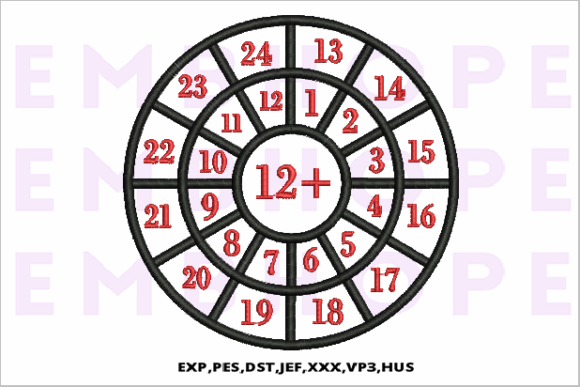
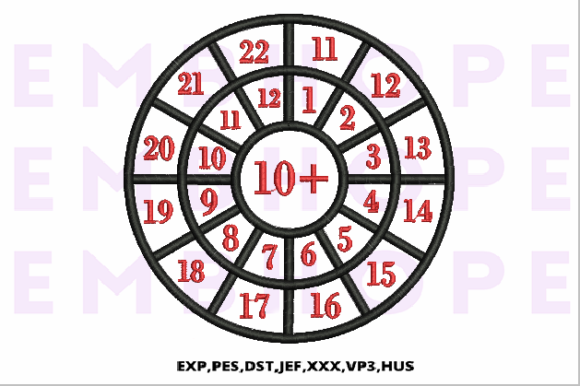
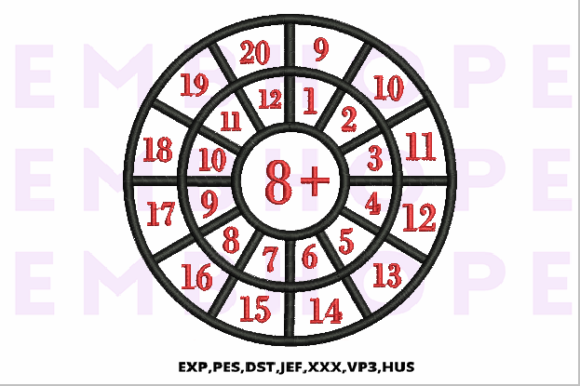
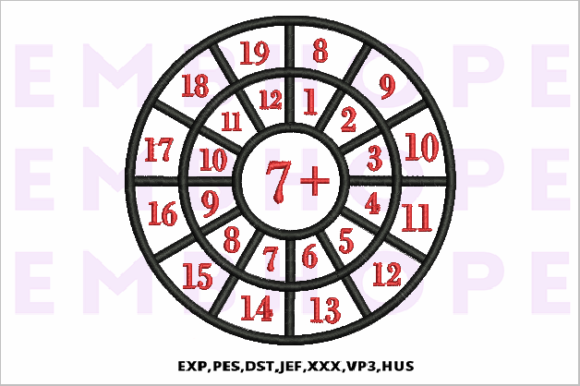
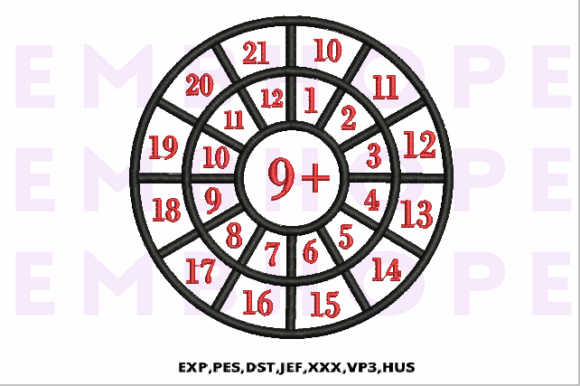
As an embroidery designer who’s developed hundreds of commercial designs for small businesses, my first read on Addition Wheel 9 is immediate and positive: it’s a bright, cheerful, and educationally grounded machine embroidery design that reads as both playful and purposeful. The title signals clear function—math practice—while the description (“bright and cheery Addition Wheels embroidery designs… great embroidered throughout the classroom”) tells me this isn’t just decorative. It’s built for repetition, visibility, and engagement. For a small business owner or craft brand, that translates to instant visual warmth and approachability—ideal for boutiques, bakeries with kids’ corners, pet brands offering learning kits, or florists running community workshops.
Real-World Use Across Small Business Merchandise
Addition Wheel 9 shines where many school-themed designs fall short: it scales meaningfully beyond the classroom. As an embroidered patch, it adds instant charm to denim aprons at a handmade café or boutique; stitched on the chest of staff uniforms, it subtly reinforces a brand’s commitment to learning, creativity, or intergenerational connection. On caps or tote bags, its circular layout holds strong—even at 3.5”–4” diameters—making it ideal for event merch, local library collaborations, or Etsy-branded craft kits.
I’ve used similar wheel-based embroidery files for custom apparel clients in the educational toy space, and Addition Wheel 9 fits seamlessly into that ecosystem. Its structure allows clean placement on curved surfaces like cap fronts (with proper digitizing adjustments), and its open center invites optional personalization—think a small business name or logo inserted digitally before stitching. As a sleeve detail on work shirts or a subtle accent on product packaging tags, it elevates handmade product presentation without overwhelming.
Where Caution Is Key: Practical Embroidery Limits
While Addition Wheel 9 is versatile, it’s not universally forgiving. Its “bright and cheery” nature likely relies on contrast-heavy thread colors and defined outlines—so caution is needed on dark uniforms or textured fabrics like heavy canvas or terry cloth. High stitch density in the wheel segments could cause puckering on lightweight knits or unstable weaves unless paired with appropriate cutaway or tear-away stabilizer.
At sub-2” sizes—say, for tiny lapel patches or mini tote bag labels—the numerals and operators may lose legibility. Always test Addition Wheel 9 in black and white first to assess outline clarity and spacing integrity. Also verify whether the original embroidery file includes simplified versions for small patch use; if not, consider light manual editing or consult your digitizer before mass production.
Brand Identity & Customer Trust: More Than Just a Math Tool
For small businesses, every embroidered element contributes to perceived professionalism and brand cohesion. Addition Wheel 9 doesn’t scream “corporate”—and that’s its strength. Used thoughtfully, it signals authenticity, playfulness, and intentionality. A local bakery adding it to kids’ cookie decorating aprons builds emotional resonance. A pet brand stitching it onto training treat pouches implies care, patience, and growth—values customers connect with deeply.
Crucially, this design avoids cliché. Unlike generic apples or chalkboards, Addition Wheel 9 feels specific, functional, and quietly clever—enhancing customer trust through visual consistency and thoughtful execution. When repeated across aprons, tote bags, and printable mockups for client pitches, it becomes a recognizable motif that strengthens visual identity without requiring a full logo redesign.
Essential Designer Notes Before You Stitch
Before committing Addition Wheel 9 to commercial embroidery projects, here’s what I always do—and recommend you do too:
- Test the embroidery file in grayscale to evaluate contrast and spacing without color distraction.
- Stitch a sample at your target patch size—especially if using it for cap embroidery or small-batch product labels.
- Review thread color options against your fabric: bright threads pop on light cotton but fade on navy twill unless balanced with metallic or high-sheen poly.
- Confirm hoop size compatibility—circular designs like Addition Wheel 9 often require mid-size hoops (e.g., 4” x 4” or 5” x 7”), which affects machine setup time and cost per unit.
- Always test on your actual fabric: stitch density and tension behave differently on linen versus polyester blend.
- Use stabilizer suited to your base material—cutaway for stretchy knits, tear-away for stable wovens, and fusible for lightweight linens used in boutique merchandise.
- Create a printable mockup for client approval before stitching live inventory—it saves revisions and builds confidence in your custom apparel process.
- Compare Addition Wheel 9 alongside your other design assets: does it harmonize with your current logo, fonts, and color palette? Consistency matters more than novelty.
- Verify commercial licensing terms—since this is listed under School and Embroidery, confirm it permits resale on physical products, especially if selling via Etsy or wholesale channels.
Final Thought: A Quietly Strategic Design Choice
Addition Wheel 9 isn’t just another digital embroidery file—it’s a quietly strategic asset for small business merch. It bridges education and emotion, function and flair, classroom utility and boutique charm. Whether you’re embroidering staff aprons for a creative studio, branding tote bags for a local florist’s workshop series, or designing limited-edition patches for a pet brand’s “Train & Treat” line, this design delivers recognition, warmth, and quiet credibility. As a working embroidery designer, I reach for pieces like Addition Wheel 9 when I need dependable performance, visual friendliness, and room for brand storytelling—all in one clean, circular stitch.