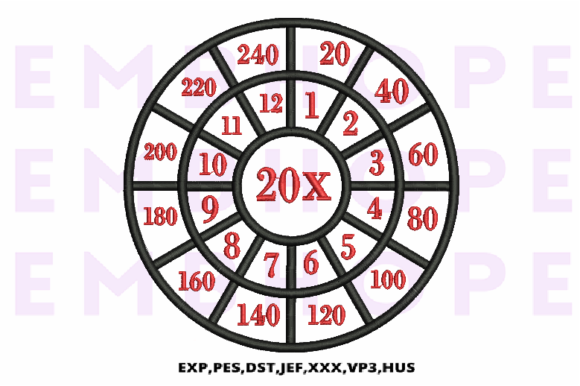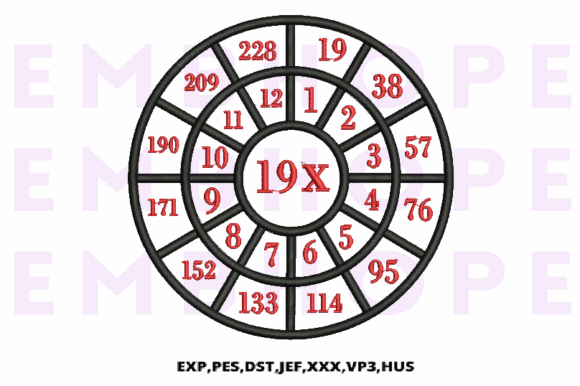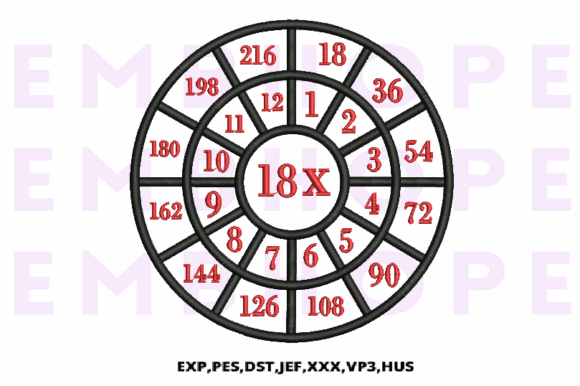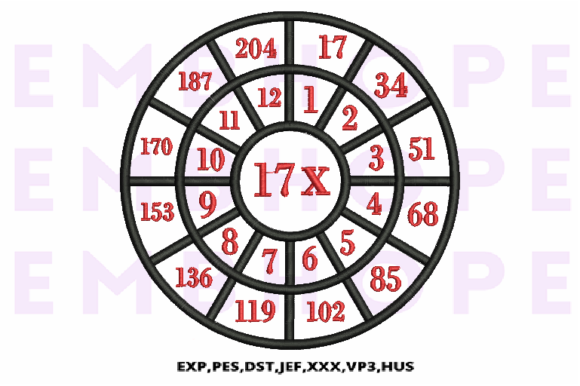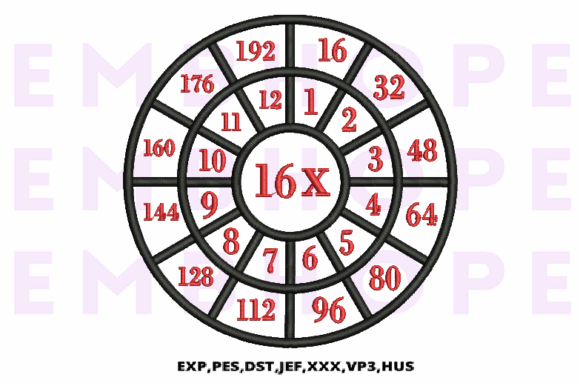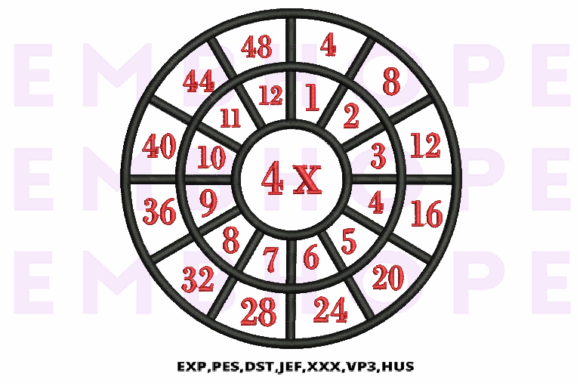
Multiplication Math Wheels 4 X
A Bright, Playful Anchor for Learning-Focused Embroidery Projects
As a designer who’s stitched everything from nursery wall hangings to boutique school supply totes, I opened Multiplication Math Wheels 4 X expecting charm—and got something more: a well-paced visual rhythm that feels intentional, not just decorative. It’s not a dense math chart or a cluttered worksheet turned stitch file. Instead, it’s a circular, balanced layout—clean lines, generous spacing between numbers, and a cheerful, uncluttered energy. The “wheels” motif gives it motion and friendliness, making multiplication feel approachable rather than intimidating. That matters deeply when you’re embroidering for real kids, real classrooms, and real small businesses building trust through thoughtful handmade products.
Where This Design Naturally Lands—and Why It Sells
I recently used Multiplication Math Wheels 4 X on a set of organic cotton tea towels for a local Montessori co-op’s holiday shop. Paired with simple cross-stitch numerals and a soft sage border, it became an instant favorite—not as “math homework,” but as joyful, tactile learning decor. That’s the sweet spot: Multiplication Math Wheels 4 X thrives where education meets everyday life. Think embroidered sweatshirt cuffs for after-school tutors, patch sets for homeschool planners, baby onesies (with simplified wheels and larger numerals), or even framed pillow covers for a teacher’s lounge. It reads clearly at 3–4 inches wide, holds up beautifully on medium-weight cotton twill for tote bags, and scales down thoughtfully for cap brims—if digitized with care.
What Works Smoothly in Real Embroidery Workflow
- Custom apparel: On midweight fleece sweatshirts, the open layout avoids heavy fill-stitch buildup—no puckering, no thread breakage during long runs.
- Embroidered patch: Clean outer circle and consistent line weight make it ideal for heat-seal or sew-on patches. Holds shape well after laundering.
- Tote bag design: Centered on a 12”x15” canvas tote, it reads instantly—even from across a classroom or craft fair booth.
- Baby embroidery: Gentle curves and rounded numerals avoid sharp corners that could irritate sensitive skin—especially important on onesies or burp cloths.
- Digital embroidery file use: As a standalone element in printable mockups, it adds warmth and purpose to Etsy listings for educational craft bundles.
Where to Pause—and Test First
This isn’t a one-size-fits-all embroidery file. Its charm relies on clarity, so certain contexts need extra attention. On stretchy fabric like jersey tees, stabilizer choice is non-negotiable—use cutaway + topping to keep numerals crisp. For dark fabric, test thread colors early: bright yellow or sky blue pop best against navy or charcoal, but pale pastels vanish. Avoid placing Multiplication Math Wheels 4 X near seams, darts, or curved surfaces like cap crowns unless you’ve verified hoop clearance and digitizing flow. And while the design feels light, don’t assume low stitch density—some versions include subtle satin-stitch borders or inner ring accents that add density. Always inspect the file’s layering before stitching a finished product.
How It Shapes Perception—Beyond the Stitch
When customers see Multiplication Math Wheels 4 X on a handmade item, they don’t just register “math.” They register intention: a maker who understands developmental stages, values playful learning, and cares about visual harmony. That builds customer trust—especially for Etsy sellers offering personalized gifts or small shop owners curating boutique-branded classroom supplies. It also elevates giftability: teachers appreciate functional beauty, parents love meaningful details on baby items, and craft fairs reward designs that tell a quiet, confident story. Because it’s rooted in School but executed with design discipline, it avoids looking dated or overly academic—a rare win for educational embroidery.
Practical Designer Notes You’ll Actually Use
- Test on scrap fabric first—especially if combining with other elements like applique design or running-stitch borders.
- Check thread color contrast in natural light; screen previews lie. A warm white works on oatmeal linen, but can disappear on cream cotton.
- Review stitch density manually—look for tight clusters around the center hub or overlapping numerals that may cause bulk.
- Confirm hoop size compatibility before assigning to client work; some versions extend beyond 4x4 boundaries.
- Inspect small details like dot accents or numeral serifs—they’re charming but fragile on thin fabric or high-speed machines.
- Test black-and-white mockups to verify legibility without color crutches.
- Compare light and dark fabric backgrounds side-by-side—you’ll spot subtle contrast issues fast.
- Use proper stabilizer: tear-away for stable wovens, cutaway for knits, and lightweight topping for textured fabrics like terry cloth towels.
- Verify licensing before selling finished items or bundling the digital embroidery file—commercial use rights aren’t implied by listing category alone.
A Design That Earns Its Place—Not Just Fills Space
Multiplication Math Wheels 4 X stands out because it doesn’t shout. It invites. It supports. It fits naturally into the quiet confidence of a well-made handmade product—whether that’s a custom embroidered apron for a math tutor, a limited-run pillow cover for a teacher appreciation bundle, or a standout listing in a craft business’s seasonal holiday embroidery collection. It’s proof that educational themes don’t have to sacrifice design integrity—and that sometimes, the most effective machine embroidery design is the one that makes learning feel like play, stitch by thoughtful stitch.