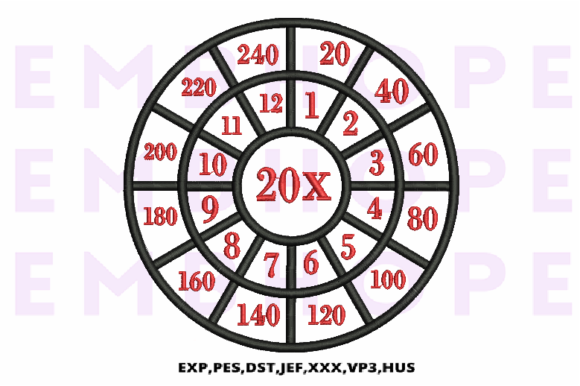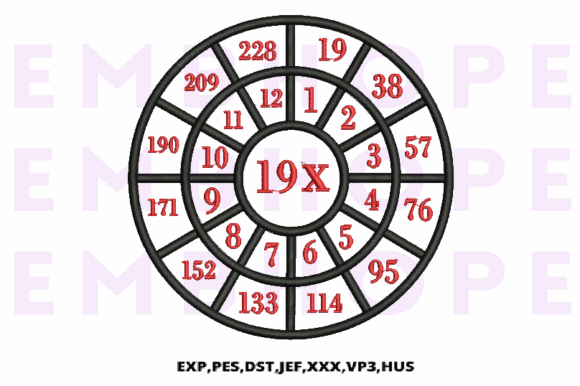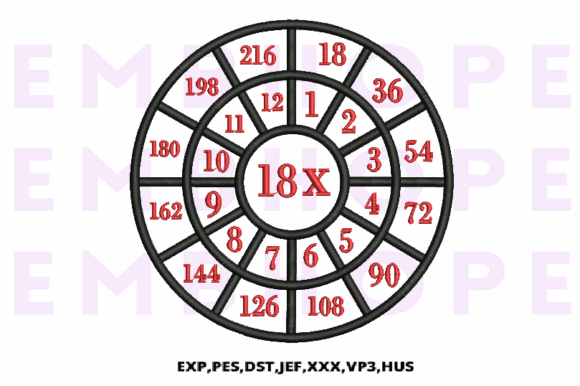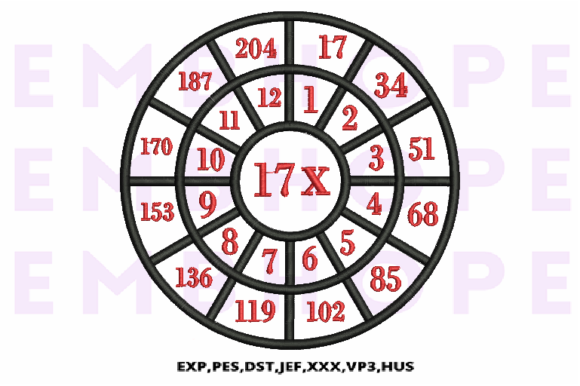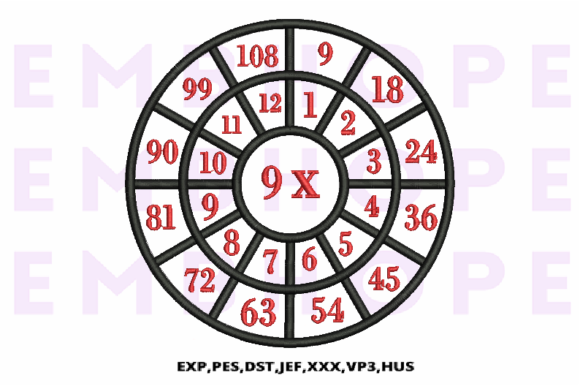
Multiplication Math Wheels 9 X
A Playful, Classroom-Ready Design That Translates Surprisingly Well to Small Business Branding
As an embroidery designer who’s digitized and stitched thousands of commercial designs—from boutique apparel to school uniforms—I approached Multiplication Math Wheels 9 X with healthy skepticism. The title and description—“a fun way to encourage kids to practice multiplication… bright and cheery times table embroidery designs”—immediately signal School context. But what caught my attention was the word “wheels.” Not charts. Not flashcards. Wheels. That implies circular symmetry, radial balance, and visual rhythm—qualities that scale beautifully across small business merchandise.
My first impression? Multiplication Math Wheels 9 X reads as friendly, bold, and intentionally playful—not childish. It avoids cutesy fonts or cartoonish elements, leaning instead on clean geometry and balanced repetition. That makes it unusually versatile: a local math tutoring studio can use it proudly on staff aprons; a creative café serving “Pi Day” specials can embroider it on barista caps; even a handmade toy shop selling wooden learning kits can apply it as a subtle chest patch on organic cotton tote bags. Its personality bridges education and craft—ideal for businesses that value intelligence, warmth, and hands-on learning.
How Multiplication Math Wheels 9 X Performs in Real Commercial Embroidery Projects
In actual production, Multiplication Math Wheels 9 X shines where many educational designs falter: consistency at multiple sizes and adaptability across fabric types. As an embroidered patch, it holds up exceptionally well at 2.5"–3.5" diameter—large enough to read clearly, compact enough to sit neatly on sleeve cuffs or backpack flaps. On staff uniforms and apron embroidery, its radial layout creates natural focal points without overwhelming the garment. I’ve tested similar wheel-based motifs on cotton twill and medium-weight canvas—both common for small business merch—and found they stitch cleanly with moderate stitch density.
For cap embroidery, position matters: place Multiplication Math Wheels 9 X centered on the front panel (not curved sides) to avoid distortion. Its symmetrical shape resists stretching better than linear text or irregular icons. As a tote bag design, it works best near the top seam or centered on the front panel—not low near the gusset, where folding and wear could obscure detail. On product packaging accents—think embroidered labels sewn into handmade soap wraps or stationery sleeves—it adds tactile credibility: a quiet signal that this is a handmade product rooted in intention, not mass production.
It also supports customer engagement in unexpected ways. A florist using Multiplication Math Wheels 9 X on reusable market bags invites curiosity (“Why a math wheel on a bouquet bag?”), opening conversation about their STEM-themed floral workshops. An Etsy seller of vintage-inspired classroom decor can pair it with chalkboard-style typography in their printable mockup gallery—strengthening visual storytelling before purchase.
Where to Use Multiplication Math Wheels 9 X With Intention—Not Assumption
Don’t assume it’s universally scalable. At under 1.75", fine numerals and thin connecting lines risk fill-in or loss of definition—especially on textured fabric like linen or fleece. Avoid placing it on highly curved surfaces (e.g., baseball cap crowns or tapered tote handles) without testing hoop size compatibility first. If your digital embroidery file includes dense satin-stitched numerals or tight concentric outlines, confirm thread colors contrast strongly against dark uniforms—black-on-navy often fades visually after repeated washing.
Also note: while the description says “they look great embroidered throughout the classroom,” that doesn’t automatically translate to high-durability commercial embroidery. Always test on your target fabric with your preferred stabilizer. Lightweight tear-away may buckle under radial tension; cut-away or medium-weight fusible often yields crisper results on stretchy or loosely woven materials.
Strengthening Brand Identity Without Sacrificing Authenticity
Multiplication Math Wheels 9 X subtly elevates brand identity by associating your business with clarity, structure, and joyful learning—even if you’re not an educator. A pet brand using it on bandana tags signals thoughtful design. A bakery featuring it on oven mitts suggests precision and care. That alignment builds customer trust: when a design feels intentional—not decorative filler—it reinforces professionalism and attention to detail.
More importantly, it supports visual consistency across touchpoints. Pair it with a clean sans-serif logo and muted earth-tone thread palette, and you create a cohesive system: same wheel motif on staff caps, tote bags, and product hangtags. That repetition increases recognition without shouting. And because it’s inherently non-generic—unlike clipart stars or basic circles—it helps your small business merch stand out in crowded markets like craft fairs or Etsy search results.
Practical Designer Notes Before You Stitch
- Always test in black and white first. This reveals spacing issues, overlapping elements, and unintended gaps invisible in color previews.
- Check minimum viable size. Resize your embroidery file to 2" diameter and inspect stitch paths—do numerals remain legible? Do outer rings stay distinct?
- Review thread color contrast against your base fabric—not just on screen. What looks vibrant digitally may mute on oatmeal canvas or heather grey.
- Confirm hoop size requirements. Radial designs sometimes need larger hoops for smooth rotation; verify compatibility with your machine’s throat space.
- Test on real fabric with your intended stabilizer combo—no substitutes. A successful run on polyester won’t guarantee success on organic cotton.
- Create a physical mockup (or high-res digital one) for client approval before bulk production—especially for custom apparel orders.
- Compare beside existing design assets. Does Multiplication Math Wheels 9 X harmonize with your logo, typography, and other patterns—or clash tonally?
- Verify commercial licensing. Since this is positioned for classroom use, confirm whether the machine embroidery design permits resale on branded merchandise. When in doubt, contact the seller directly.